I stare out through the window at the slow moving Martian landscape. The view is fuzzy and distorted with the constant scratching of red dust and fines over the diamond pane that forms the outer layer. It is a subtle new vista, evolved overnight by the steady three kph crawl of our base. I chew the last of my breakfast eager to get out.
Science rarely offers last chances. If you've searched in nine places and there is only one remaining, then experience tells you that the thing you are looking for will not be there. It has nothing to do with probability, just that's how it goes. We have one last site to prepare, one last science station to plant into the red soil. To be honest, while disappointing, this does not distract from what we have achieved. Being here, mapping, exploring, finding what a robot never can. Our footprints will be erased in the coming storm, but the fact of our being here will remain.
I turn back inwards, looking at the other three sat at the table with me. Wei, the eager, young Chinese geologist. Adoyo, our engineer, is bleary and irritated. He has been arguing with the boss again. The boss being sat opposite me, eyes fixed on the latest download package describing his business empire as he prepares his responses to be sent back in the evening reports. Maxwell Johnson, the richest man on Mars. That was the tagline they were using back on Earth. I don't know if they still do, or whether the sheer tedium of real exploration and science has been knocked off the news feeds. I haven't been keeping up.
*
The muffled noise of tires crackling over the regolith helps to clear my head as Wei races me to the horizon, the lip of an oversize crater. I follow his tracks, nipping at his heels occasionally, while checking that the delivery of breadcrumb transponders is active and tracing our way back. The metal tube we call home is out of sight, but it emits its own beacon, reflected on the display in my rear-view mirror. The breadcrumbs are in case that beacon stops working, which has happened twice in the months that we have been here.
We slow down after twenty k, waiting for the triangulation messages from the positioning satellites overhead to provide us with more resolution on our destination. Wei comes to a stop and I slide alongside him. Looking over he seems troubled. Unusual for him. He's been pretty positive all the way through, even despite the conflicts between Adoyo and Johnson.
"What you thinking?" I ask.
"Nothing. Just, you know. This is the last time."
"Yeah. But there's still plenty of work to do. And the data is going to keep us busy for years."
His fingers click at his equipment. He's just toying with it, switching things off and on again.
"Lal, do you think we're going to find anything now?"
I wonder how to answer that before choosing honest.
"No. We've given it a good try, but this is a puzzle that has been going on since the first ESA orbiter told us the methane was here. Even with confirmation of the Carbon-12 there's no guarantee we will find out where this life actually is, or if it's actually here. Looking back at the planning I did it seems hopelessly naïve now, faced with the reality of being here. Live is buried deep, it must be if its going to survive. The real science is going to be done over the years that these stations are here and working, not by us. Maybe that's not a bad thing."
"What do you mean?"
"For all that machines can tell us what we need to know, we needed to come here. And if we still have no answers then there's maybe a reason to come back. If we do find life then there's going to be so much opposition to colonisation it will probably stop any attempt. Whether it's from fear or a desire to preserve. There'll just be more robotic missions while it gets debated in the UN."
"I don't think that would stop my government. Or men like Johnson."
I shrug.
"That might be true." I reply. "But there still has to be a reason, a purpose for spending the money it would take for humans to live here. Having somewhere to dump surplus population is one thing, but there needs to be a way to support them, and there needs to be a way to make a profit. That's why Johnson is here. Sure he gets the kick out of being the big explorer but everything that man does is to make a profit."
Wei is quiet suddenly. Even his breathing is paused.
"You've never talked like this before."
"No. Because it doesn't matter. Look around us. We're here. Nothing else compares to that. We're the first people to land successfully on Mars. I don't even care if we get home at this point."
My comm beeps. The triangulation overlays on the map and I flick on the electric engine of my rover.
"Let's go." I shout, hitting my accelerator before Wei has even had chance to get started.
Showing posts with label fragment. Show all posts
Showing posts with label fragment. Show all posts
Sunday, 28 March 2010

Sunday, 31 January 2010
Ambassador
A dusting of snow lies on the just-frozen surface of the water garden. A bird flies across the surface, landing briefly in a display of all four of its wings before launching itself back into the air. The sky overhead continues to lighten, the weak, yellow sun occasionally breaking through the low cloud. I sit on the cold wood of the observation deck, a tea slowly cooling in its vacuum cup, the steam rising elegantly from its bowl. To be asked to sit here, to wait, is something of an honour and a test.
There is a sound like the tearing of paper behind me and I slowly turn to see Weran coming out form the door to the main complex. He is short for a Renonsian, only seven foot, but he has all the casual elegance of his species that always makes me feel inadequate to the light gravity of their moon. He clasps his forearms together in greeting, bowing slightly to expose his rear wings. Although they are not able to support any Renonsian in flight they are elegant, well-looked after, the feathers falling along his back in a short cascade of muted colours.
“Ambassador.” He says, in English. I understand their language well enough to be able to speak it flawlessly, the twenty year flight gave me plenty of time for study, but they always insist that dialogue be conducted in our tongue. None of the reasons that I have heard have convinced me why.
Behind Weran another Renonsian emerges, taller, dressed in the light armour of their warrior caste. Finally, I think. This is turning out to be a very interesting day.
I have seen many soldiers while I have been here. Although they nominally fall under the command of the civilian authority they conduct themselves with a disdain for any that are not of their caste. The civilian administration defers to them in a great deal, although there is a separation of concerns between economics and politics that has been proving particularly difficult to navigate.
There is a sound like the tearing of paper behind me and I slowly turn to see Weran coming out form the door to the main complex. He is short for a Renonsian, only seven foot, but he has all the casual elegance of his species that always makes me feel inadequate to the light gravity of their moon. He clasps his forearms together in greeting, bowing slightly to expose his rear wings. Although they are not able to support any Renonsian in flight they are elegant, well-looked after, the feathers falling along his back in a short cascade of muted colours.
“Ambassador.” He says, in English. I understand their language well enough to be able to speak it flawlessly, the twenty year flight gave me plenty of time for study, but they always insist that dialogue be conducted in our tongue. None of the reasons that I have heard have convinced me why.
Behind Weran another Renonsian emerges, taller, dressed in the light armour of their warrior caste. Finally, I think. This is turning out to be a very interesting day.
I have seen many soldiers while I have been here. Although they nominally fall under the command of the civilian authority they conduct themselves with a disdain for any that are not of their caste. The civilian administration defers to them in a great deal, although there is a separation of concerns between economics and politics that has been proving particularly difficult to navigate.
Sunday, 24 January 2010
terror, even when overcast
You see, I was there. All you know, you saw on television, through the internet, blurred with commentary and idiotic rambling by people who knew nothing about what was happening. Filling others’ ignorance with their own base desires and cravings. I didn’t see any journalists, just the suffering. I can only think that the journalists stayed away, reporting by looking inwards from their hotels and the fly-over footage provided by the UAVs while they stayed safe in the knowledge that no-one could possibly contradict them.
I was going to work. It had already started and none of us standing on the platforms knew. I had seen it and not understood.
The sky is always open, even when patterned with the flowing underside of clouds piled over each other, sliced by the arcing paths of darkly silhouetted birds. It is the sky of a flat land, not hemmed in with hills or mountains, stretching and filling the mind of those willing to look upwards. The shapes above tear and fight leaving wounded pictures of emptiness. Only when the tram arrived did I look down, back at the earth.
I was jammed against the doors once they closed, as usual. Trying to avoid the press of strangers bodies, find enough space to be able to place my feet in balance against the jagged movement of the tram. I turned myself around to look through the window, through the condensation forming on the glass, at the speeding scenery; The blank spaces between people melt. The tram passed under the twin concrete flyovers of the M62. The gap between them a grey shaft of light punctuated by the upward flight of a startled pigeon and the illumination of an inane and brilliantly coloured graffiti. Beyond it the industrial estates, the tarmac retail park, the endless lines of garages selling cars hidden behind industrial scrubland.

It was as the tram descended into Manchester that I realised the colour had gone. Then the tram stopped, shaking to a sudden halt with the application of the emergency brake. The carriage mood split into annoyance and the usual expectation of shoddy service. Then the doors opened. I almost fell out. After checking that there was nothing coming that might injure me, and irritated at the way I had almost fallen from the tram, I jumped down already composing the letter to the company in my head.
It is not so simple a thing to describe. What happened next, I mean. A few on the tram had followed me down. The rest were stoic, watching me from the window with impassive faces. Looking down the road towards Piccadilly I caught sight of its head, rising and falling above the buildings. A shade of non-colour, almost the same as the sky but of a different light, a feeling of reality broken and ground under foot. A daikaiju imagined by Escher. Then it screamed, crying with a scent of destruction, dust billowing around it even as the scream began to try and infiltrate my own mind. It feels now like it was a reflexive, animal instinct that caused it to destroy the city. It was not a judgement, or a warning. It was not summoned by some ancient Mayan treasure brought to the museum, or physical experiment at the university. It wasn’t some super-dimensional rift caused by City’s win in the derby. Watching it I knew that it had always been there. We had just never seen it before.
I turned and ran.
I was going to work. It had already started and none of us standing on the platforms knew. I had seen it and not understood.
The sky is always open, even when patterned with the flowing underside of clouds piled over each other, sliced by the arcing paths of darkly silhouetted birds. It is the sky of a flat land, not hemmed in with hills or mountains, stretching and filling the mind of those willing to look upwards. The shapes above tear and fight leaving wounded pictures of emptiness. Only when the tram arrived did I look down, back at the earth.
I was jammed against the doors once they closed, as usual. Trying to avoid the press of strangers bodies, find enough space to be able to place my feet in balance against the jagged movement of the tram. I turned myself around to look through the window, through the condensation forming on the glass, at the speeding scenery; The blank spaces between people melt. The tram passed under the twin concrete flyovers of the M62. The gap between them a grey shaft of light punctuated by the upward flight of a startled pigeon and the illumination of an inane and brilliantly coloured graffiti. Beyond it the industrial estates, the tarmac retail park, the endless lines of garages selling cars hidden behind industrial scrubland.

It was as the tram descended into Manchester that I realised the colour had gone. Then the tram stopped, shaking to a sudden halt with the application of the emergency brake. The carriage mood split into annoyance and the usual expectation of shoddy service. Then the doors opened. I almost fell out. After checking that there was nothing coming that might injure me, and irritated at the way I had almost fallen from the tram, I jumped down already composing the letter to the company in my head.
It is not so simple a thing to describe. What happened next, I mean. A few on the tram had followed me down. The rest were stoic, watching me from the window with impassive faces. Looking down the road towards Piccadilly I caught sight of its head, rising and falling above the buildings. A shade of non-colour, almost the same as the sky but of a different light, a feeling of reality broken and ground under foot. A daikaiju imagined by Escher. Then it screamed, crying with a scent of destruction, dust billowing around it even as the scream began to try and infiltrate my own mind. It feels now like it was a reflexive, animal instinct that caused it to destroy the city. It was not a judgement, or a warning. It was not summoned by some ancient Mayan treasure brought to the museum, or physical experiment at the university. It wasn’t some super-dimensional rift caused by City’s win in the derby. Watching it I knew that it had always been there. We had just never seen it before.
I turned and ran.
Sunday, 3 January 2010
Winter Hunt
A melody of snowflakes plays across the large cockpit window. The Captain steps from around the wheel, passing control with a touch on his First Mate’s shoulder, moving forwards into the bubble frame of the window. Some of the snow catches and melts against the glass, some sticks in little piles. Beyond the flickering white leaves there is only the dark, grey sky. To the Captain’s senses the rest of the world has disappeared. Only their instruments tell them where they are.
The Captain sighs, lightly, rubbing a finger along his forehead, wiping at the irritation where the band of his cap clings tightly.
“How are we suppose to find anything in this?” He asks. Neither the First Mate nor the navigator bother to answer. Each just keeps their eyes focused on the panels in front of them. “Sergeant.” He calls out.
A young, squat man with dark hair and a scar running along the side of his face, distorting its natural and beautiful symmetry, enters through the heavy door that passes joins the cabin to the rest of the command gondola.
“Sir?” The Sergeant asks.
“Fetch me the passenger. Tell her we are in need of her assistance.”
The sergeant does not stop to ask which passenger, even though there are more than twenty civilians and a small platoon of Red Army soldiers on board. Only one would be summoned to see the Captain and only one is a woman.
The Captain sighs, lightly, rubbing a finger along his forehead, wiping at the irritation where the band of his cap clings tightly.
“How are we suppose to find anything in this?” He asks. Neither the First Mate nor the navigator bother to answer. Each just keeps their eyes focused on the panels in front of them. “Sergeant.” He calls out.
A young, squat man with dark hair and a scar running along the side of his face, distorting its natural and beautiful symmetry, enters through the heavy door that passes joins the cabin to the rest of the command gondola.
“Sir?” The Sergeant asks.
“Fetch me the passenger. Tell her we are in need of her assistance.”
The sergeant does not stop to ask which passenger, even though there are more than twenty civilians and a small platoon of Red Army soldiers on board. Only one would be summoned to see the Captain and only one is a woman.
Tuesday, 28 October 2008
the horde
the dark mass of dust on the horizon signifies the coming storm, the men riding across the desert with purpose. their scouts had already been spotted and the town prepared. those who could have already fled, taking their families and their valuables with them on the road to the south, hoping that the bandits they might meet will not take everything. as the sun rises through the mid-morning the slow, deep sound of the horses starts to be heard, barely audible, felt more through the soles of the feet than by the ears. instead of panic a grim determination overtakes those stood at the walls, their armour old and poorly fitting but still strong, their swords are sharpened and ready. as they look out they can see the figures through the dust. a thousand devils approach, wearing helmets wrapped in furs and strung with worn bones of enemies. the sounds of their heathen prayers layer the wind.
Monday, 1 September 2008
funghi
The room is full of a mixture of people already sat in various states, talking and admiring each other's foliage. I neck the pill and walk through, looking for someone I know. I see Edgar sitting in an alcove, unmoving, with a small crowd sitting and watching him while chatting. Mushrooms are sprouting from his face and there are even the buds of flowers starting to form around his neck. -It's like the Jane Experiment. I hear one of them say but I move on before I can hear the response. I feel the tingle on my face as the drug starts to take hold. I touch my cheek and look at the dusting of mould already starting to form from my cells as they change. I decide to sit down. Movement slows the transformation. A woman walks by with ferns pouring down her face where her hair had been, green moss highlighting her cheekbones, then I recognise her from the grey eyes. -Mary, I say. She looks over at me and smiles. -How are you? I ask. -Amazing. She replies. This is my best time ever. I notice the edges of the fern leaves are starting to curl and brown. She tugs at one, crumbling it in her fingers. -I guess it's coming to an end now.
Sunday, 24 August 2008
The motion of the train feels strange to him, evoking the feeling of memories he cannot translate to more than a blur. Looking through the window at the rushing countryside, with its hedges and green hills, he feels that his mind should be like this view, the parallax motion of the past should be slow and solid while the present rushes by without an indication of what will yet be remembered. His perspective seems somehow reversed, with only the present offering a sense of reality while internally there is nothing. The past slips by without any chance to examine or hold on to it, like eating peas with a knife.
He reaches down to the floor, picking up the rough canvas bag he has been carrying and opens its buckles with narrow, pale fingers. Inside there is little. A bottle of water with the seal still intact and a sandwich wrapped in plastic. He draws the sandwich out, again. He cannot quite being himself to eat it. He examines it. There is something wrong with it, something not real that he feels is at the edge of his vision. He tilts his head away from it to see if a different view offers any light. It still appears to him as two slices of foamy, tasteless bread enclosing slowly hardening cheese and ham. A girl is sat watching him from the seats on the other side of the carriage. Her mother, who is travelling with her, has momentarily disappeared.
-Is this really a sandwich? He asks her, holding it up.
She looks at him with a mixture of suspicion and precociousness. -Sort of, she says and then she smiles and looks away.
The man continues to stare at it for a short time and then twists himself in his seat to look for a bin. There is one tucked behind his chair. He pushes the sandwich inside. He doesn't want to take the risk.
He reaches down to the floor, picking up the rough canvas bag he has been carrying and opens its buckles with narrow, pale fingers. Inside there is little. A bottle of water with the seal still intact and a sandwich wrapped in plastic. He draws the sandwich out, again. He cannot quite being himself to eat it. He examines it. There is something wrong with it, something not real that he feels is at the edge of his vision. He tilts his head away from it to see if a different view offers any light. It still appears to him as two slices of foamy, tasteless bread enclosing slowly hardening cheese and ham. A girl is sat watching him from the seats on the other side of the carriage. Her mother, who is travelling with her, has momentarily disappeared.
-Is this really a sandwich? He asks her, holding it up.
She looks at him with a mixture of suspicion and precociousness. -Sort of, she says and then she smiles and looks away.
The man continues to stare at it for a short time and then twists himself in his seat to look for a bin. There is one tucked behind his chair. He pushes the sandwich inside. He doesn't want to take the risk.
Sunday, 17 August 2008
waiting
The sweat beads down his jaw, mixed with dust, pooling with an itch at his chin. He feels the sun hot with the dying afternoon. The air is thick with the smell of gunpowder and burning flesh. The woollen rag tied over his eyes is too tight. His arms ache with the pressure of the ropes holding them at his back. He is tired of waiting, listening to the sounds of other men being ordered around and adjusting their equipment, reloading their rifles. The knot in his stomach is filled with frustration and fear. He feels his legs shake and wants nothing more than to fall down and lie on the ground. If he dies like a dog he is still dead.
Monday, 4 August 2008
shiny new thing
The scrape of my shovel against soil is reassuring. I tilt the assorted garbage; sticky, old rice, torn cardboard, some faded scraps of cloth and rotten fruits into the back of the truck. I stop to adjust the handkerchief tied over my face as inadequate protection against the dust and the smell. Despite the morning cool my forehead is already beaded with sweat and I grab the corner of my flourescent vest to wipe my forehead.
As I lean forward again, shovel extended, I see it. Panic hits me quick, the fear that this is the time. It has been months since one of us last encountered something and the tension had almost gone. Sensing my fear my team also suddenly stop and turn to face me, I am stuck in a tableau, bent forwards, muscles straining as though i am posing for one of the Dictator's celebrations of the workers.
My team assemble in a semi-circle of orange jackets around me to inspect it. Many start to exchange and light cigarettes, their smell bitter over the acrid, rotting food.
Pretty quickly there are two major opinions. The first quickly concludes that it is a militia IED, like the one that claimed Hassan a couple of months back. But the second faction quickly weighs in pointing out how shiny, how manufactured and secretive its design is. American, they say.
I look at it. It is oval, like a pebble worn by a river, with a quicksilver glow marred only by a little fleck of egg stuck to its side. It looks like a bomb but it doesn't feel like one. I stretch upwards, relieving the growing pains in my back and reach out for it. As one the semi-circle take a couple of steps back. I pick it up. It feels cold and heavy. It doesn't explode. Somewhere deep inside my chest my heart picks up its rhythm again.
As I lean forward again, shovel extended, I see it. Panic hits me quick, the fear that this is the time. It has been months since one of us last encountered something and the tension had almost gone. Sensing my fear my team also suddenly stop and turn to face me, I am stuck in a tableau, bent forwards, muscles straining as though i am posing for one of the Dictator's celebrations of the workers.
My team assemble in a semi-circle of orange jackets around me to inspect it. Many start to exchange and light cigarettes, their smell bitter over the acrid, rotting food.
Pretty quickly there are two major opinions. The first quickly concludes that it is a militia IED, like the one that claimed Hassan a couple of months back. But the second faction quickly weighs in pointing out how shiny, how manufactured and secretive its design is. American, they say.
I look at it. It is oval, like a pebble worn by a river, with a quicksilver glow marred only by a little fleck of egg stuck to its side. It looks like a bomb but it doesn't feel like one. I stretch upwards, relieving the growing pains in my back and reach out for it. As one the semi-circle take a couple of steps back. I pick it up. It feels cold and heavy. It doesn't explode. Somewhere deep inside my chest my heart picks up its rhythm again.
Monday, 7 July 2008
Over Leningrad
The sky over Leningrad is full of airships. Their fascist grey fabric reflects a dull October sky. From the windows of the gondolas slung at their bellies a thousand cameras point downwards, the world's press is floating above us mingled, undoubtedly, with a few special observers from various governments, all keen to capture the events below. To be frank, it makes me nervous. Security on the ground is hard enough to manage without also having to worry about some nihilist bomber floating overhead, unseen until it's too late and a primed grenade is falling to the ground.
And if it were only the nihilists I have to worry about I wouldn't be smoking my fiftieth cigarette since the morning, my lungs hacking their protest as the cold bites into my face, and the reports from my men that need constant attention. Despite my warnings Chairman Trotsky insists that all of this should go ahead. He has something big prepared. Something he wants the world to see.
And if it were only the nihilists I have to worry about I wouldn't be smoking my fiftieth cigarette since the morning, my lungs hacking their protest as the cold bites into my face, and the reports from my men that need constant attention. Despite my warnings Chairman Trotsky insists that all of this should go ahead. He has something big prepared. Something he wants the world to see.
Tuesday, 17 June 2008
watching the boats
The rain splatters on the ground in heavy, crushing smacks. The scent of it seeps through the woman's cloak as she clutches her body with spindle thin arms. Dark, blue eyes look out at the passing carts, the people ignoring her with unfocused glances, while she scratches herself with a sly grin. She is watching the canal, lodged tight with narrow boats waiting to unload their cargoes. She examines the etchings on their solar panels, dim in the darkening light, looking for the sign of the boat she is waiting for. The one that she will be paid to spot if she can find it and then get to Jarrod before any of the others.
"Hey, you." A man's voice calls out and she feels that it is directed at her. She looks for the source: A man dressed in a faded and torn overcoat is looking right at her. "You've got no right to be here."
"On the man's business. You got no right talking to me like that." She replies.
He moves towards her and the ordinary folk move out of his way, as invisible to them as she is.
"Hey, you." A man's voice calls out and she feels that it is directed at her. She looks for the source: A man dressed in a faded and torn overcoat is looking right at her. "You've got no right to be here."
"On the man's business. You got no right talking to me like that." She replies.
He moves towards her and the ordinary folk move out of his way, as invisible to them as she is.
Monday, 26 May 2008
Not ready yet.
The flesh flickers and grows in an explosion of silent stop motion, muscles flexing and combining while reaching out like tentacles. His face slackens and grows pale, as though he is in a trance, a coma death mask as his body tears through energy reserves to rebuild itself into a new form.
Monday, 5 May 2008
edge of embers tilts itself slowly in the darkness, turning its belly towards the distant sun. the exotic dance of particles across its quicksilver skin ripples against him like an ocean wave. the burst and fade of their energy is sucked inwards, a welcome feeling that offers scant blessing against the pain. the scars of the attack cut deep across its back, it is all it can do to counter the tumbling of its motion to keep itself orientated towards the sun, ignoring the frozen outpourings of gases and liquids that blemish its smooth shell.
they will be back to finish it once they realise that it is no longer a threat. it counts three of their ships dead and that has scared them away for now but it can feel them watching with the subtle ping of directed radio waves. it turns its attention inwards, towards its guest. she is conscious but seems strangely calm. she must know that it is dying and that she will die too yet she does not react the way it expects. she sits calmly.
"skatha bruin edge of embers." she says, quietly. "you fought bravely, and well. what is our situation."
it feels sorry for her and briefly keeps silent while it composes a report.
"if we have an hour, or two, it is possible that i can repair myself enough to push us on towards jupiter ring. i doubt that we will have that long before they return."
it feels her nod inside it, the shift of her weight against the seat.
"then we must find another way." she says.
they will be back to finish it once they realise that it is no longer a threat. it counts three of their ships dead and that has scared them away for now but it can feel them watching with the subtle ping of directed radio waves. it turns its attention inwards, towards its guest. she is conscious but seems strangely calm. she must know that it is dying and that she will die too yet she does not react the way it expects. she sits calmly.
"skatha bruin edge of embers." she says, quietly. "you fought bravely, and well. what is our situation."
it feels sorry for her and briefly keeps silent while it composes a report.
"if we have an hour, or two, it is possible that i can repair myself enough to push us on towards jupiter ring. i doubt that we will have that long before they return."
it feels her nod inside it, the shift of her weight against the seat.
"then we must find another way." she says.
Tuesday, 22 April 2008
consul
The consul climbed back up the parapet with a gratified swagger to announce the resuscitation of the talks. Beyond the city walls, amongst the hum and stutter of generators and conversations, a few interested people stood to listen, eyes shaded from the bright morning sun. The army was encamped and relaxed, the majority of soliders tired and worn out from the years of conflict but still belligerent. Amongst them sat Bel Tor, skinny and pale, tending a small fire which heated his platoon's morning coffee as they sat playing cards or maintaining their equipment with oils and polish.
-What's he saying? Darren suddnely shouted at Bel. -Anything worth knowing?
Bel just shrugs and pushes another stick into the flames that are only half-visible in the light.
-What's he saying? Darren suddnely shouted at Bel. -Anything worth knowing?
Bel just shrugs and pushes another stick into the flames that are only half-visible in the light.
Sunday, 13 April 2008
dirty
The dirt climbs up the wall in layers of years. Cracks stretch through the plaster under a bubbling scar tissue of paint. The windows set in the wall are paradoxically clean, their transparency marred only by faded paper pasted against the glass to list special offers and the reflection of the facing street, bright in the spring sunlight. Except for the glass you would think that this shop had been closed for years, that the stacks of office furniture on sale inside had been abandoned, like the shuttered pawnbroker's next door.
Sunday, 16 March 2008
rain
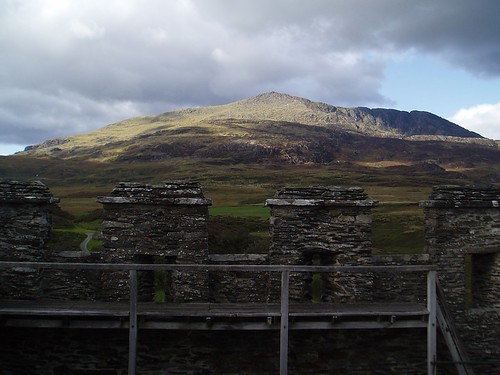
The wind drives the rain in sheets against David's body. He winces as the cold stings his face. His legs feels tired with as his trousers quickly soak through to his skin. The path is muddy and slightly treacherous. He pauses frequently to assess the best way forwards. Calculated jumps take him over larger pools of mud and water. Occasionally he detours around them, through heather that catches at his feet. Ahead clouds skim the folding slopes and hide the horizon. His world becomes only what is immediately around him. His grandmother will be furious with him for being out here, especially in this weather, but his fear has faded. His pace quickens.
The path is now lighter, made of sand and rock as it quickly ascends and leaves the mud behind. The damp does not bother him so much. The exertion brings him to relish the feel of the rain. He reaches the peak and the land flattens off. Ahead, he knows, is a plateau that stretches for miles. The level ground is filled with the warp and weft of streams, bracken and heather. Startled, a moor hen suddenly cries out ahead of him and flees deeper into the stunted bushes. He keeps on. He is not far now.
The clouds lift slightly and his view suddenly extends over the whole of the valley. On the peak of a small lip of land the blackened stones stand out against the sky. He runs up to the first of the three and kneels beside it. He pays no attention to the damp cold seeping into his trousers. His hands run over the rough surface of the stone looking for the faint cups and spirals that remain after centuries of weathering. He feels the vibrations pass through his fingers and leans closer to listen. On the edge of his hearing he finds it, the ringing beats of the rain against the rock. A thin membrane between worlds is being shaken by the sound and sings out with an alien song. Beneath the hard surface of the stone another world is bubbling up against ours.
The path is now lighter, made of sand and rock as it quickly ascends and leaves the mud behind. The damp does not bother him so much. The exertion brings him to relish the feel of the rain. He reaches the peak and the land flattens off. Ahead, he knows, is a plateau that stretches for miles. The level ground is filled with the warp and weft of streams, bracken and heather. Startled, a moor hen suddenly cries out ahead of him and flees deeper into the stunted bushes. He keeps on. He is not far now.
The clouds lift slightly and his view suddenly extends over the whole of the valley. On the peak of a small lip of land the blackened stones stand out against the sky. He runs up to the first of the three and kneels beside it. He pays no attention to the damp cold seeping into his trousers. His hands run over the rough surface of the stone looking for the faint cups and spirals that remain after centuries of weathering. He feels the vibrations pass through his fingers and leans closer to listen. On the edge of his hearing he finds it, the ringing beats of the rain against the rock. A thin membrane between worlds is being shaken by the sound and sings out with an alien song. Beneath the hard surface of the stone another world is bubbling up against ours.
Sunday, 9 March 2008
Archery Contest
I am Clan Ion Monkey. My name is Dao Zhou Tong.
The clansmen behind me are silent but I can feel their focus. Their energy is urging and protecting me as I face the straw target ahead. The air in the courtyard is still, untouched by gentle curls of currents stirring over the ruined brick edges of the walls that enclose us. The bow in my hands is taut, the arrow fixed against my thumb. The lacquered wood, curved reflexively in a pattern recalling compound bows reaching back three thousand years, creaks slightly under the pressure. I draw my focus to the target, although it is not so important as the lasers that mark the width of range with a ghost trail of reddened dust at regular intervals.
The sun is weak overhead. A pale touch through thin wisps of cloud. Overhead I hear the gods as them squabble, jostling for the best position to watch my dare to them. When I am ready I draw them bow back just an extra few milimetres and flick my fingers forwards to release the string with an outrush of breath mixed with prayer.
"Ho!" The judge shouts. The speed comes back almost immediately and I know I am the first to see it appear on the board. Everyone else keeps their eyes upwards a little longer, scared of the reaction, but the speed is the only thing of interest to me. "198.5" The judge announces. My clan shouts with joy. I can feel the smile across my face. So close to the limit. So close to meeting the gods' wrath. And yet I escaped. I turn, raising my arms, holding the bow aloft. I sneer at my opponent, at his choice. He had come in at only 175 before. A coward's speed. His clan is silent. We have won. I have won.
An arrow can fly from the bow in excess of 200 kilometres per hour. To do so is to bring the attention of the gods alive in the clouds that extend beyond the edge of the atmosphere and to bring death. That is the challenge. To remain in their eye, to bask in their attention, but to remain alive.
My clan shout and jeer at our silent opponents. They have been shamed. A scuffle breaks out at the corner of my vision but it soon dissipates. Everyone knows the rules. I walk towards the target to pull out the arrow that is firmly embedded through the flag of their clan, Polar Waste. I tuck the arrow away and tear the flag from the pins that held it on to tie it around my head.
"Wait." My opponent has gotten up and walked to the edge of the range, his bow in his hand and an arrow ready. I can see him shaking from where I am. I can only will him not to be so stupid as to try to beat my speed. Not today.
He raises the bow, pointing it towards me. The crowd of clansmen on both sides is silent, whispers of discontent but also appreciation of a show. I cannot show fear but I do not trust myself to speak. I just know that when I meet this guy in hell I am going to give him a bloody good kicking for killing me like this.
He strains at the bow. The point shifts with his fear and anger. I suddenly doubt he would even hit me. I don't see it launch. My eyes are closed. There is a flash of light, a crack of thunder more powerful than any I've heard from nature. I feel myself thrown back against the dummy and we both tumble to the floor. The gods are angry. I roll and try to piece together any evidence of injury. None. I look back through blackening smoke and ugly smells. It is rare for a contest to end in a death.
Then a shadow falls. The flicker of a kite overhead. The fear leaps through all of us and everyone leaps up to run, to flee before the police, or worse, get here to punish us. I laugh. I run too.
As soon as I can I get under cover. I crash through the cracked wooden boards protecting the entrance of an abandoned office. Inside is littered with debris of broken desks and faded pipe. Wong has tracked me, loyal and accurate, amongst the crowd while carrying the case for the bow and its arrows. No matter how fast we are there is no way we can go unnoticed while carrying the bow. He is shorter than I am, and fatter, a perfect guard with the bright badge of our monkey spinning around its atomic system emblazoned on his chest and the short, broad dagger tucked with a sly glint of ready action in his belt. My laughter has cut to a smile which I see reflected in his face.
"We showed them, eh?" He says.
I nod. He continues.
"198.5. That's incredible."
"I cannot believe that Polar Waste idiot decided to try it."
Wong shrugs. Despite his slightly piggish looks I have learnt that Wong is incredibly intelligent. That's why I trust him. You don't want somebody stupid looking after you. I wonder, sometimes, why someone as intelligent as him would choose to run with us. I guess he does it for the same reasons: What else is there except that moment of random choice every moment of our lives. We both know that yesterday 198.5 could have killed us, that the god flying over on his cloud at that time might have had a different margin of error, or a different expectation of what makes a threat.
The clansmen behind me are silent but I can feel their focus. Their energy is urging and protecting me as I face the straw target ahead. The air in the courtyard is still, untouched by gentle curls of currents stirring over the ruined brick edges of the walls that enclose us. The bow in my hands is taut, the arrow fixed against my thumb. The lacquered wood, curved reflexively in a pattern recalling compound bows reaching back three thousand years, creaks slightly under the pressure. I draw my focus to the target, although it is not so important as the lasers that mark the width of range with a ghost trail of reddened dust at regular intervals.
The sun is weak overhead. A pale touch through thin wisps of cloud. Overhead I hear the gods as them squabble, jostling for the best position to watch my dare to them. When I am ready I draw them bow back just an extra few milimetres and flick my fingers forwards to release the string with an outrush of breath mixed with prayer.
"Ho!" The judge shouts. The speed comes back almost immediately and I know I am the first to see it appear on the board. Everyone else keeps their eyes upwards a little longer, scared of the reaction, but the speed is the only thing of interest to me. "198.5" The judge announces. My clan shouts with joy. I can feel the smile across my face. So close to the limit. So close to meeting the gods' wrath. And yet I escaped. I turn, raising my arms, holding the bow aloft. I sneer at my opponent, at his choice. He had come in at only 175 before. A coward's speed. His clan is silent. We have won. I have won.
An arrow can fly from the bow in excess of 200 kilometres per hour. To do so is to bring the attention of the gods alive in the clouds that extend beyond the edge of the atmosphere and to bring death. That is the challenge. To remain in their eye, to bask in their attention, but to remain alive.
My clan shout and jeer at our silent opponents. They have been shamed. A scuffle breaks out at the corner of my vision but it soon dissipates. Everyone knows the rules. I walk towards the target to pull out the arrow that is firmly embedded through the flag of their clan, Polar Waste. I tuck the arrow away and tear the flag from the pins that held it on to tie it around my head.
"Wait." My opponent has gotten up and walked to the edge of the range, his bow in his hand and an arrow ready. I can see him shaking from where I am. I can only will him not to be so stupid as to try to beat my speed. Not today.
He raises the bow, pointing it towards me. The crowd of clansmen on both sides is silent, whispers of discontent but also appreciation of a show. I cannot show fear but I do not trust myself to speak. I just know that when I meet this guy in hell I am going to give him a bloody good kicking for killing me like this.
He strains at the bow. The point shifts with his fear and anger. I suddenly doubt he would even hit me. I don't see it launch. My eyes are closed. There is a flash of light, a crack of thunder more powerful than any I've heard from nature. I feel myself thrown back against the dummy and we both tumble to the floor. The gods are angry. I roll and try to piece together any evidence of injury. None. I look back through blackening smoke and ugly smells. It is rare for a contest to end in a death.
Then a shadow falls. The flicker of a kite overhead. The fear leaps through all of us and everyone leaps up to run, to flee before the police, or worse, get here to punish us. I laugh. I run too.
As soon as I can I get under cover. I crash through the cracked wooden boards protecting the entrance of an abandoned office. Inside is littered with debris of broken desks and faded pipe. Wong has tracked me, loyal and accurate, amongst the crowd while carrying the case for the bow and its arrows. No matter how fast we are there is no way we can go unnoticed while carrying the bow. He is shorter than I am, and fatter, a perfect guard with the bright badge of our monkey spinning around its atomic system emblazoned on his chest and the short, broad dagger tucked with a sly glint of ready action in his belt. My laughter has cut to a smile which I see reflected in his face.
"We showed them, eh?" He says.
I nod. He continues.
"198.5. That's incredible."
"I cannot believe that Polar Waste idiot decided to try it."
Wong shrugs. Despite his slightly piggish looks I have learnt that Wong is incredibly intelligent. That's why I trust him. You don't want somebody stupid looking after you. I wonder, sometimes, why someone as intelligent as him would choose to run with us. I guess he does it for the same reasons: What else is there except that moment of random choice every moment of our lives. We both know that yesterday 198.5 could have killed us, that the god flying over on his cloud at that time might have had a different margin of error, or a different expectation of what makes a threat.
Monday, 3 March 2008
know
The first thing he knows is the sound of braking wheels against tarmac. The second thing he knows is the world suddenly tilted at a right angle. After that there is only waiting for what will happen when his body falls hard against the road, waiting for the burning movement to stop, waiting for the pain to start, so that he can know what has happened.
Sunday, 17 February 2008
Garbage In Garbage Out
I look out of the kitchen window while stood at the sink, a half-clean mug in my hands. The rubbish collector moves along the street, pausing regularly to grab the next bin at the street edge with its giant paw and tip the contents into its mouth. The rubbish is pre-digested by microbial matter lining the bin's guts so the scene looks like the unholy union between a giant iguana and a woolly mammoth enjoying a can of coke.
My brain kicks in. No, it tells me. Rubbish is collected by trucks, with men hooking the bin to a lifting arm which tips it into the compactor. Shut up, I tell it. That was a long time ago. Things are different now. I go back to making my cup of tea.
My brain kicks in. No, it tells me. Rubbish is collected by trucks, with men hooking the bin to a lifting arm which tips it into the compactor. Shut up, I tell it. That was a long time ago. Things are different now. I go back to making my cup of tea.
Sunday, 10 February 2008
Joy of water
The peacock jumps on to the bench beside me.
"Dong wo ma?" It says. "Do you understand me?"
"Yes." I reply in English. "I understand you." I pull out a small block of the treats I had purchased at the park entrance and hold it out to the bird. Its body does not seem so large when seen so close up but there is something terrifying in the way it looks at me with its black eyes, the multi-coloured skirt of its feathers cascading down over the edge of the bench. It takes the food from my hand with a carefully vicious stab and swallows it whole. As the chemicals and amino acids in the pellet quickly absorb into its bloodstream it receives both a pleasing kick of a positive behavioural feedback loop and the bootstrapping the next part of its program. It begins babbling about the history of these gardens, its expression of ancient arts and the mores of the scholarly class of old Beijing. The studious official, the good scholar. The bureaucrat as archetype.
The bird starts translating an old poem by Du Fu, fifteen hundred years old and still studied with a reverence that makes my own country's affair with Shakespeare positively healthy in comparison. An old woman walks up to me. A beggar, I realise, her face scarred and her hands broken and bent with arthritis or work. Even though China is undergoing its brightest blooming since the Tang and the age of Du Fu, there is still monstrous poverty. Too much even for the large scale bio-alchemical wizardry of the Chinese science gurus. The old woman holds out her hand and looks at me before realising with disgust that I am white, a scruffy foreigner, and unlikely to be able to offer her much at all. She curses and moves on, aiming for a young, professional-looking Chinese couple, hoping that the man will want to impress the young woman with his generosity.
There is a dampness to the air here that my skin is soaking up with a happiness after absence. Although the air in Beijing is normally as desiccating as the deserts around it the park clearly has mechanisms to raise the humidity to help the plants. After a month in the north I am grateful. Even in my home country, where it still rains regularly, there is a caution to wantonness with water since the droughts began. Memories of them pepper my childhood, the frustrations of the adults and the sense of a danger never quite understood or explained. So here is a good place to sit and wait for my friends, watching pretty girls walking past, listening to the drone of the guide-bird while I feel the joy of water in the air.
"Dong wo ma?" It says. "Do you understand me?"
"Yes." I reply in English. "I understand you." I pull out a small block of the treats I had purchased at the park entrance and hold it out to the bird. Its body does not seem so large when seen so close up but there is something terrifying in the way it looks at me with its black eyes, the multi-coloured skirt of its feathers cascading down over the edge of the bench. It takes the food from my hand with a carefully vicious stab and swallows it whole. As the chemicals and amino acids in the pellet quickly absorb into its bloodstream it receives both a pleasing kick of a positive behavioural feedback loop and the bootstrapping the next part of its program. It begins babbling about the history of these gardens, its expression of ancient arts and the mores of the scholarly class of old Beijing. The studious official, the good scholar. The bureaucrat as archetype.
The bird starts translating an old poem by Du Fu, fifteen hundred years old and still studied with a reverence that makes my own country's affair with Shakespeare positively healthy in comparison. An old woman walks up to me. A beggar, I realise, her face scarred and her hands broken and bent with arthritis or work. Even though China is undergoing its brightest blooming since the Tang and the age of Du Fu, there is still monstrous poverty. Too much even for the large scale bio-alchemical wizardry of the Chinese science gurus. The old woman holds out her hand and looks at me before realising with disgust that I am white, a scruffy foreigner, and unlikely to be able to offer her much at all. She curses and moves on, aiming for a young, professional-looking Chinese couple, hoping that the man will want to impress the young woman with his generosity.
There is a dampness to the air here that my skin is soaking up with a happiness after absence. Although the air in Beijing is normally as desiccating as the deserts around it the park clearly has mechanisms to raise the humidity to help the plants. After a month in the north I am grateful. Even in my home country, where it still rains regularly, there is a caution to wantonness with water since the droughts began. Memories of them pepper my childhood, the frustrations of the adults and the sense of a danger never quite understood or explained. So here is a good place to sit and wait for my friends, watching pretty girls walking past, listening to the drone of the guide-bird while I feel the joy of water in the air.
Subscribe to:
Posts (Atom)

